
Blog Details
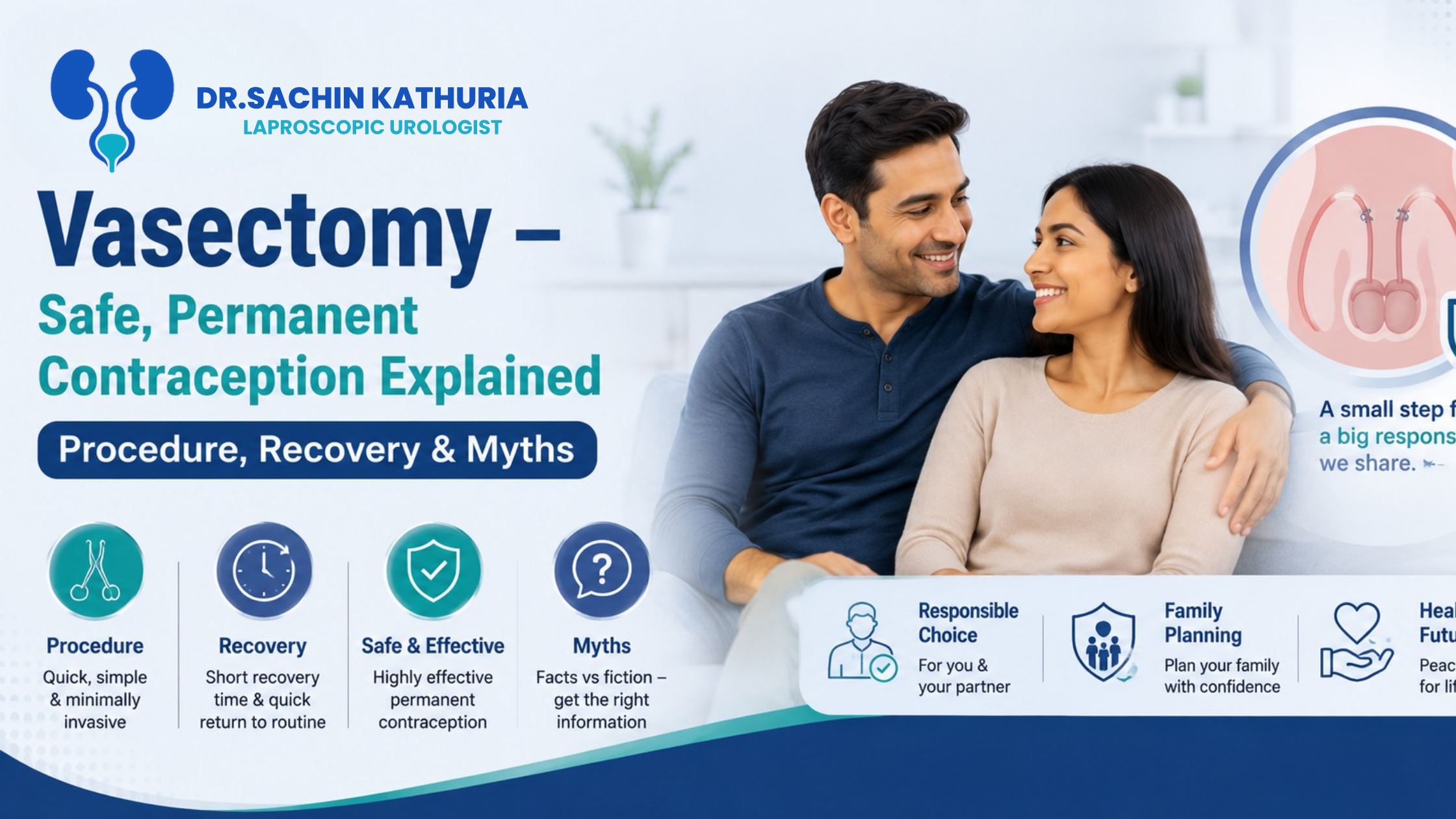
Vasectomy – Safe, Permanent Contraception Explained: Procedure, Recovery & Myths
Introduction
Vasectomy is a permanent method of male contraception designed for men who are certain they do not want biological children in the future. It is a relatively simple surgical procedure that prevents sperm from entering the semen by blocking or dividing the tubes that carry sperm from the testicles.
Despite being an established method of contraception, vasectomy is surrounded by misconceptions. Some men worry that it may affect testosterone, sexual performance, ejaculation, or masculinity. Understanding how the procedure actually works can help individuals and couples make an informed decision.
Because vasectomy should generally be considered permanent, the decision requires careful discussion and appropriate counseling. Men considering the procedure can consult the Best urologist in Delhi to understand its benefits, limitations, possible risks, recovery, and whether it is suitable for their circumstances.
What Is a Vasectomy?
A vasectomy is a minor surgical procedure in which the vas deferens—the tubes that transport sperm from the testicles—are cut, sealed, blocked, or otherwise interrupted.
After the procedure, sperm can no longer enter the semen. The testicles continue producing sperm, but the body naturally absorbs them.
Vasectomy does not stop semen production because sperm make up only a small portion of the ejaculate. Most of the fluid in semen comes from other glands in the male reproductive system.
The procedure is intended to provide permanent contraception and is considered highly effective after its success has been confirmed through follow-up semen testing.
Who May Consider a Vasectomy?
Vasectomy may be appropriate for adult men who are certain that they do not want children or additional children in the future.
A person may consider it when:
The desired family size is complete
Both partners want a permanent contraceptive option
Pregnancy could pose significant health concerns for a partner
Long-term contraception is preferred
The individual understands that reversal may not be successful
The decision should be voluntary and carefully considered.
Vasectomy should not be chosen because of temporary relationship difficulties, short-term financial concerns, or pressure from another person. Men who are uncertain about future parenthood may want to consider reversible contraceptive methods instead.
How Is a Vasectomy Performed?
Vasectomy is usually performed as a day-care or outpatient procedure. Local anesthesia is commonly used to numb the treatment area.
There are different surgical approaches.
Conventional Vasectomy
During a conventional procedure, the doctor makes one or more small incisions in the scrotum to access the vas deferens. Each tube is then divided and sealed or blocked using an appropriate surgical technique.
The small incisions are subsequently closed if necessary.
No-Scalpel Vasectomy
In a no-scalpel vasectomy, the vas deferens is accessed through a very small puncture rather than a conventional incision.
This approach may result in less tissue disruption and can allow relatively quick recovery. The exact technique used depends on the surgeon, individual anatomy, and clinical circumstances.
A consultation with the Best urologist in Delhi can help patients understand the available techniques and what to expect before, during, and after the procedure.
Does Vasectomy Work Immediately?
No. This is one of the most important facts patients should understand.
Sperm may remain in the reproductive tract for some time after a vasectomy. Therefore, pregnancy is still possible during the early period after surgery.
Couples must continue using another reliable contraceptive method until follow-up semen analysis confirms that the vasectomy has been successful according to the treating doctor's criteria.
Patients should follow their surgeon's instructions regarding the timing and number of semen tests required.
Recovery After Vasectomy
Recovery is generally straightforward, although individual experiences vary.
During the first few days, some men may experience:
Mild discomfort
Swelling
Bruising
Tenderness around the scrotum
A healthcare professional may recommend supportive underwear, appropriate pain relief, and temporary activity restrictions.
Returning to Normal Activities
Many men can return to light routine activities relatively quickly. However, heavy lifting, strenuous exercise, cycling, and other activities that place pressure on the area may need to be avoided temporarily.
Sexual activity may also need to be paused for a short period based on medical advice and comfort.
Importantly, contraception must continue even after sexual activity resumes until semen testing confirms the absence or sufficiently low level of sperm according to clinical guidance.
Possible Risks and Complications
Vasectomy is generally considered a safe procedure, but no surgery is completely free of risk.
Possible complications can include:
Bleeding
Bruising
Infection
Swelling
Hematoma
Persistent discomfort
Sperm granuloma
Rare failure of the procedure
A small proportion of patients may develop persistent scrotal or testicular pain after vasectomy, sometimes referred to as post-vasectomy pain syndrome.
Anyone experiencing increasing swelling, significant pain, fever, discharge from the wound, or other concerning symptoms after the procedure should contact their healthcare provider.
Common Myths About Vasectomy
Misconceptions about vasectomy can create unnecessary anxiety. Here are some important facts.
Myth 1: Vasectomy Causes Impotence
Vasectomy does not directly interfere with the nerves or blood vessels responsible for erections.
Erectile function is therefore not expected to be reduced simply because the vas deferens has been interrupted.
Myth 2: Testosterone Levels Drop After Vasectomy
The testicles continue producing testosterone after a vasectomy. The procedure does not remove the testicles or stop normal testosterone production.
Myth 3: Ejaculation Stops After Vasectomy
Men continue to ejaculate after vasectomy.
Because sperm represent only a small proportion of semen volume, most men do not notice a major change in the amount or appearance of ejaculate.
Myth 4: Vasectomy Immediately Prevents Pregnancy
This is incorrect.
Remaining sperm can persist in the reproductive tract after surgery. Alternative contraception is necessary until post-vasectomy semen testing confirms success.
Myth 5: Vasectomy Can Always Be Easily Reversed
Vasectomy reversal procedures are available, but they are more complex than vasectomy and do not guarantee restored fertility.
Success can depend on several factors, including the amount of time since vasectomy and individual reproductive health.
For this reason, vasectomy should be approached as a permanent contraceptive decision.
Does Vasectomy Affect Sexual Health?
A common concern among men is whether vasectomy will affect libido, erections, orgasm, or sexual satisfaction.
The procedure does not directly alter testosterone production and does not prevent erections or orgasm. Semen continues to be produced and ejaculated.
Sexual desire is influenced by many factors, including hormones, physical health, psychological well-being, relationships, stress, and medications. Persistent sexual difficulties after recovery should therefore be medically evaluated rather than automatically attributed to the vasectomy.
Vasectomy vs Other Contraceptive Methods
Vasectomy differs from temporary methods such as condoms and hormonal contraception because it is intended to be permanent.
It is important to remember that vasectomy does not protect against sexually transmitted infections (STIs). Condoms may still be necessary when STI protection is required.
The choice of contraception should consider:
Future family plans
Medical history
Personal preferences
Partner's health
Effectiveness
Reversibility
Risks and benefits
Couples should discuss these considerations carefully before selecting permanent contraception.
Can Vasectomy Fail?
Vasectomy is highly effective after successful post-procedure confirmation, but no contraceptive method is completely without the possibility of failure.
Rarely, the divided ends of the vas deferens may reconnect, allowing sperm to reappear in semen.
This is another reason why follow-up semen testing is essential. Patients should not assume they are sterile simply because they have undergone surgery.
Following all post-operative instructions and completing the recommended semen analysis are important parts of the process.
When Should You Consult a Urologist?
A medical consultation is recommended before deciding on a vasectomy. During the appointment, patients can discuss their medical history, family planning goals, procedure options, possible complications, recovery, and post-operative testing.
The Best urologist in Delhi can also explain alternative contraceptive options and help patients understand why vasectomy should be considered permanent.
After surgery, medical attention should be sought for severe or worsening pain, significant swelling, persistent bleeding, fever, wound discharge, or other unusual symptoms.
Making an Informed Decision
Choosing permanent contraception is a personal decision that should be made without pressure.
Before undergoing vasectomy, men should be confident about their future family plans and understand that reversal cannot be guaranteed.
Discussing the decision with a partner can be helpful, but informed consent from the individual undergoing the procedure remains essential.
If there is uncertainty about wanting children in the future, a reversible contraceptive option may be more appropriate.
Conclusion
Vasectomy is an established and highly effective method of permanent male contraception when properly performed and confirmed through follow-up semen testing. The procedure works by preventing sperm from entering the semen and does not normally interfere with testosterone production, erections, orgasm, or ejaculation.
Recovery is usually relatively quick, but patients must follow post-operative instructions and continue alternative contraception until laboratory testing confirms success.
Anyone considering permanent contraception should have a detailed consultation with the Best urologist in Delhi to understand the procedure, possible risks, alternatives, recovery expectations, and long-term implications before making a final decision.
Frequently Asked Questions (FAQs)
1. Is vasectomy a permanent contraceptive method?
Yes. Vasectomy is intended to be permanent, and reversal does not guarantee restored fertility.
2. Does vasectomy affect testosterone?
No. The testicles continue producing testosterone after the procedure.
3. Can pregnancy occur immediately after vasectomy?
Yes. Sperm may remain in the reproductive tract, so alternative contraception is necessary until follow-up testing confirms success.
4. Does vasectomy affect erections or ejaculation?
Vasectomy does not directly affect erections, and semen continues to be ejaculated after the procedure.
5. Does vasectomy protect against sexually transmitted infections?
No. Vasectomy prevents pregnancy but does not protect against STIs.
