
Blog Details
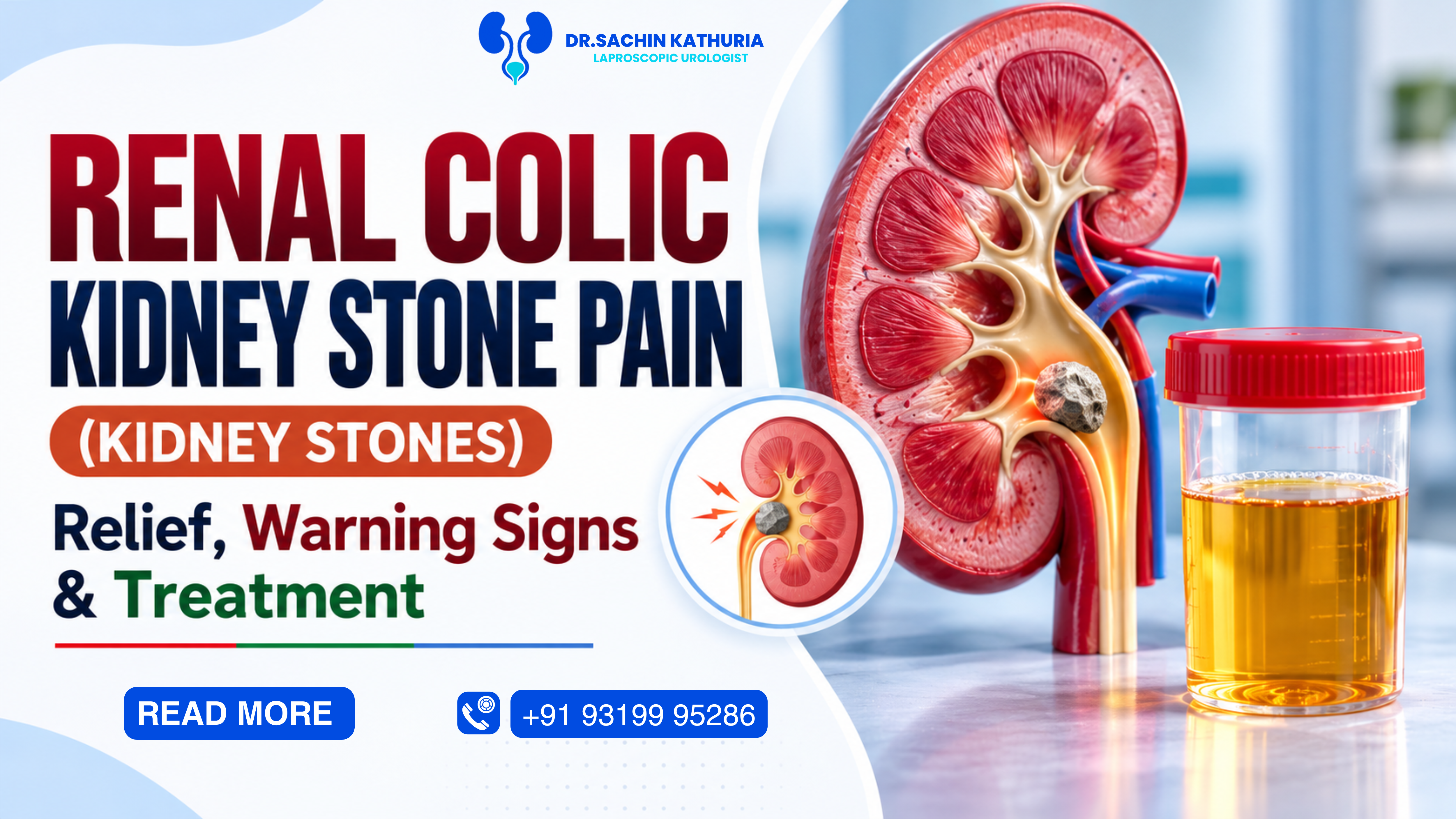
Renal Colic: Kidney Stone Pain, Relief, Warning Signs & Treatment
Renal Colic Explained: What to Do When Kidney Stone Pain Strikes, Pain Relief Options, Emergency Signs and When Treatment Is Needed
It often begins suddenly, sometimes in the middle of the night: a sharp, cramping pain in the side or back that comes in waves, makes you restless and may bring vomiting. This is renal colic, one of the most intense pains people experience. According to the Best Renal Colic Treatment in Rajinder Nagar, acting early brings relief and avoids complications.
What Is Renal Colic?
Renal colic is pain caused when a stone blocks or irritates the ureter, the tube carrying urine from the kidney to the bladder. The kidney swells as urine backs up, and the muscles of the ureter spasm, causing waves of pain.
The Best Urologist in Rajinder Nagar, explains that the pain level does not always match the size of the stone, since even a small stone can hurt a lot.
Typical Symptoms
Sudden severe pain in the flank or back
Pain spreading toward the lower abdomen
Pain that comes and goes in waves
Inability to sit or lie still
Nausea and vomiting
Burning or frequent urge to pass urine
What To Do in the First Hours
Contact a doctor early rather than waiting it out
Sip water regularly, without forcing large amounts if you are vomiting
A warm compress on the painful area may give comfort
Do not take strong painkillers on your own, as the right choice depends on your health and kidney function
Note when the pain started and any fever
How Do Doctors Confirm It?
Urine test for blood and infection
Blood tests, including kidney function
Ultrasound of the kidneys and bladder
CT scan of the abdomen when needed to see the stone’s size and position
How Is the Pain Treated?
Doctors use suitable pain relief medicines, anti-nausea medicines and fluids. Medicines that relax the ureter may be added for some stones. The Best Urologist in Rajinder Nagar, stresses that the choice of medicines should always be made by a doctor.
Will the Stone Pass On Its Own?
Small stones, generally under about 5 mm, often pass within days to a few weeks. Larger stones, or those that stay stuck, may need a procedure such as shock wave therapy or ureteroscopy.
Emergency Signs: Go to Hospital Now
Fever or chills with pain
Pain not controlled by medicines
Repeated vomiting
Little or no urine
Pain in people with a single kidney, diabetes, pregnancy or kidney disease
Confusion or severe weakness
Preventing Another Attack
Drink enough water to pass about 2 to 2.5 litres of urine a day
Cut down on salt and packaged foods
Limit excess animal protein
Keep calcium in your diet unless advised otherwise
Get a stone analysis and follow-up if advised
Conclusion
Renal colic is painful but treatable. Consult Dr. Sachin Kathuria at Sir Ganga Ram Hospital, Old Rajinder Nagar, New Delhi, or call +91 93199 95286. Choosing the Best Urologist in Rajinder Nagar, helps you get quick relief and a plan to stop stones from coming back.
FAQs
Why does stone pain come in waves?
The ureter squeezes against the stone in spasms.Should I drink lots of water during an attack?
Sip steadily. Do not force large amounts, especially if vomiting.How long does the pain last?
It varies from hours to days, depending on the stone.Does every stone need surgery?
No. Many small stones pass on their own.When is it an emergency?
With fever, uncontrolled pain, repeated vomiting or no urine.
